
Coil

Coil
A native Android remote for Phoniebox.
Open it, see what is playing, pick something else, hand the phone back. When the box starts playing, playback controls appear on your lock screen — no app launch needed.

Pick one and stay with it. Play Store builds and GitHub APKs carry different signatures, which Android treats as different apps.
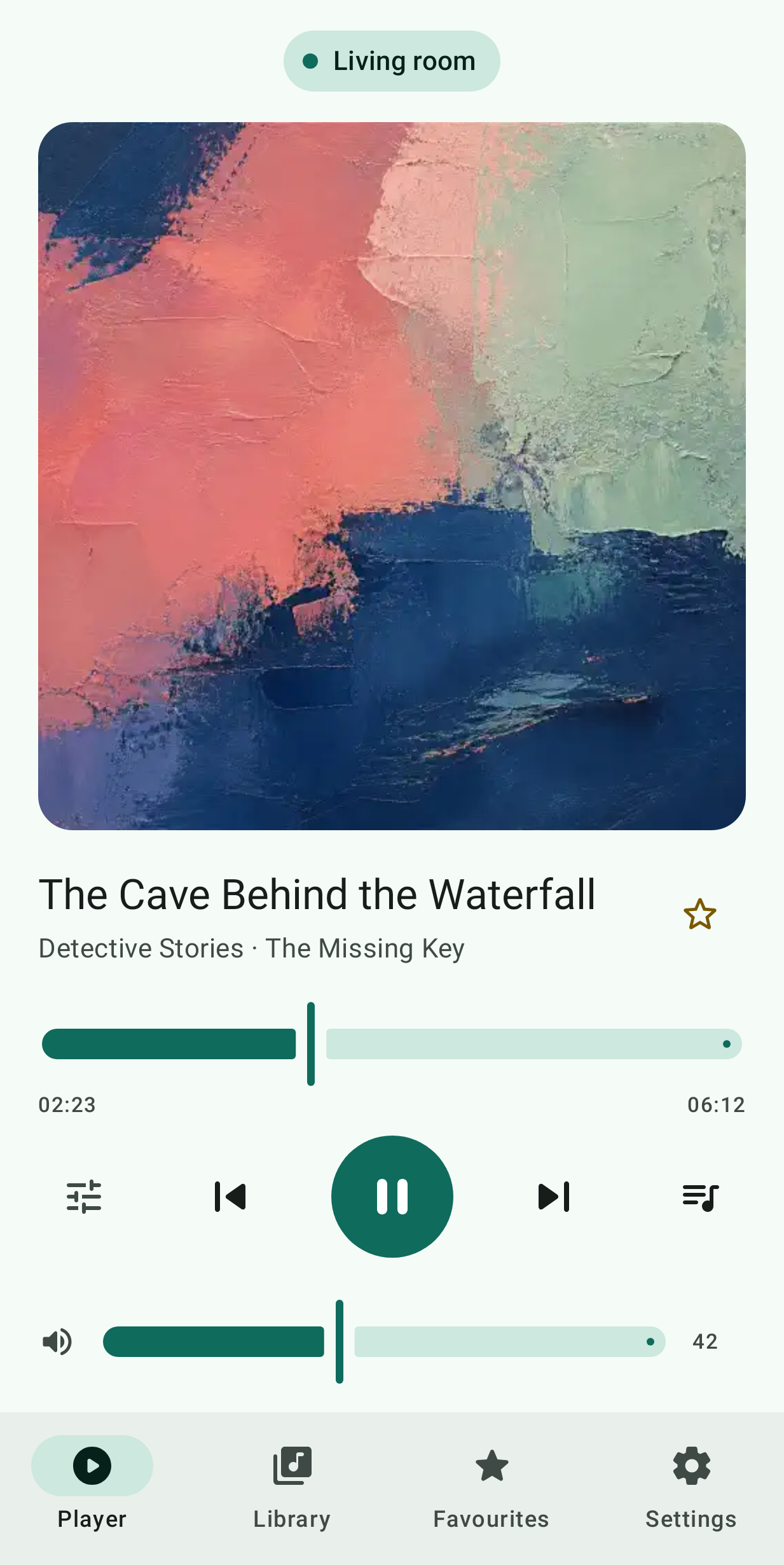
Player
Cover art, scrubbing, transport controls and volume, all on one screen.
Library browsing
Browse by folder or album and play anything you find.
Search
Find a folder, album or track. Ignores case and accents.
Sleep timer
Stops playback after a set time and leaves the box switched on.
Lock screen controls
Appear on their own when the box starts playing, and can be switched off entirely.
Favourites
Save a folder, an album or a single track, then reach it from a home screen shortcut — or a link, for an automation app or an NFC tag.
Multiple boxes
One per room, switched from the top bar, each with its own favourites.
Hardware volume buttons
Control the box while the media session is active.
Dark mode
Built for bedtime rather than bolted on.
Five languages
English, German, French, Spanish and Dutch.
Nothing leaves your network
No account, no telemetry, no cloud. Coil talks only to the boxes you configure.
Open source
GPL-3.0, on GitHub. Issues, pull requests and translations are welcome.
Screenshots
-
Player
Cover art, the track title, scrubbing and transport controls.
-
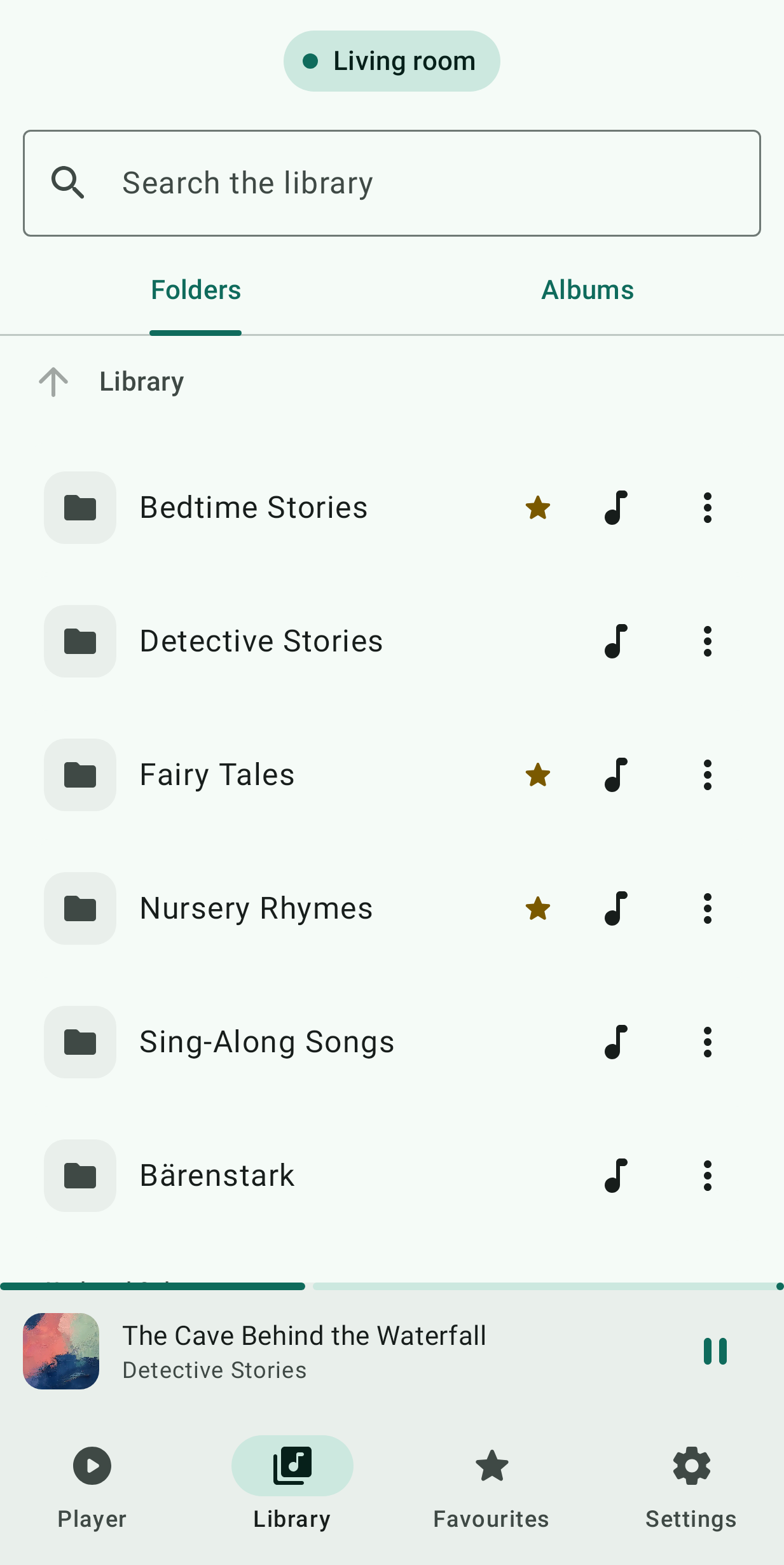
Library
Browse by folder or album, with the mini player docked at the bottom.
-
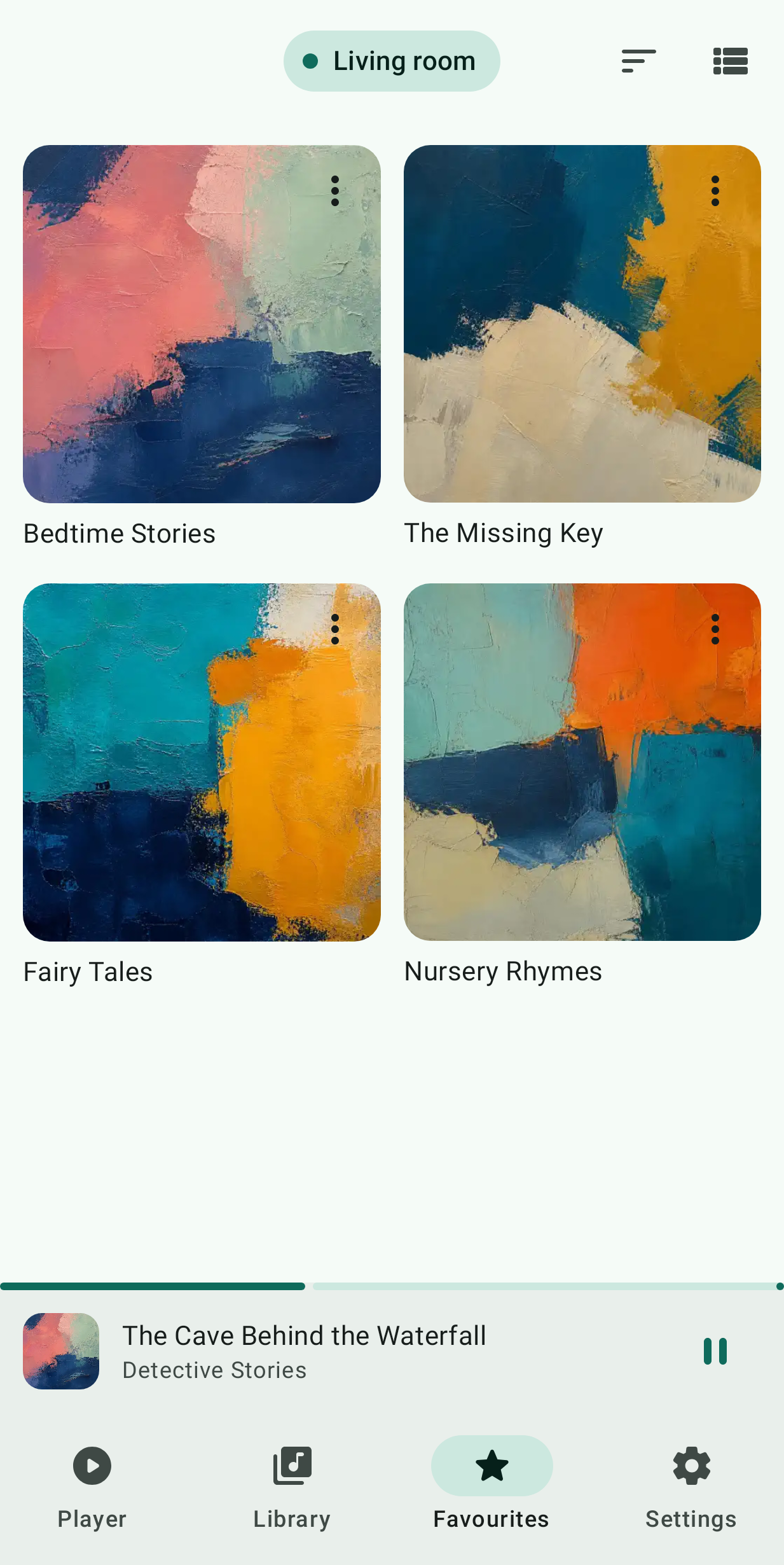
Favourites
Saved folders, albums and tracks as a grid of covers.
-
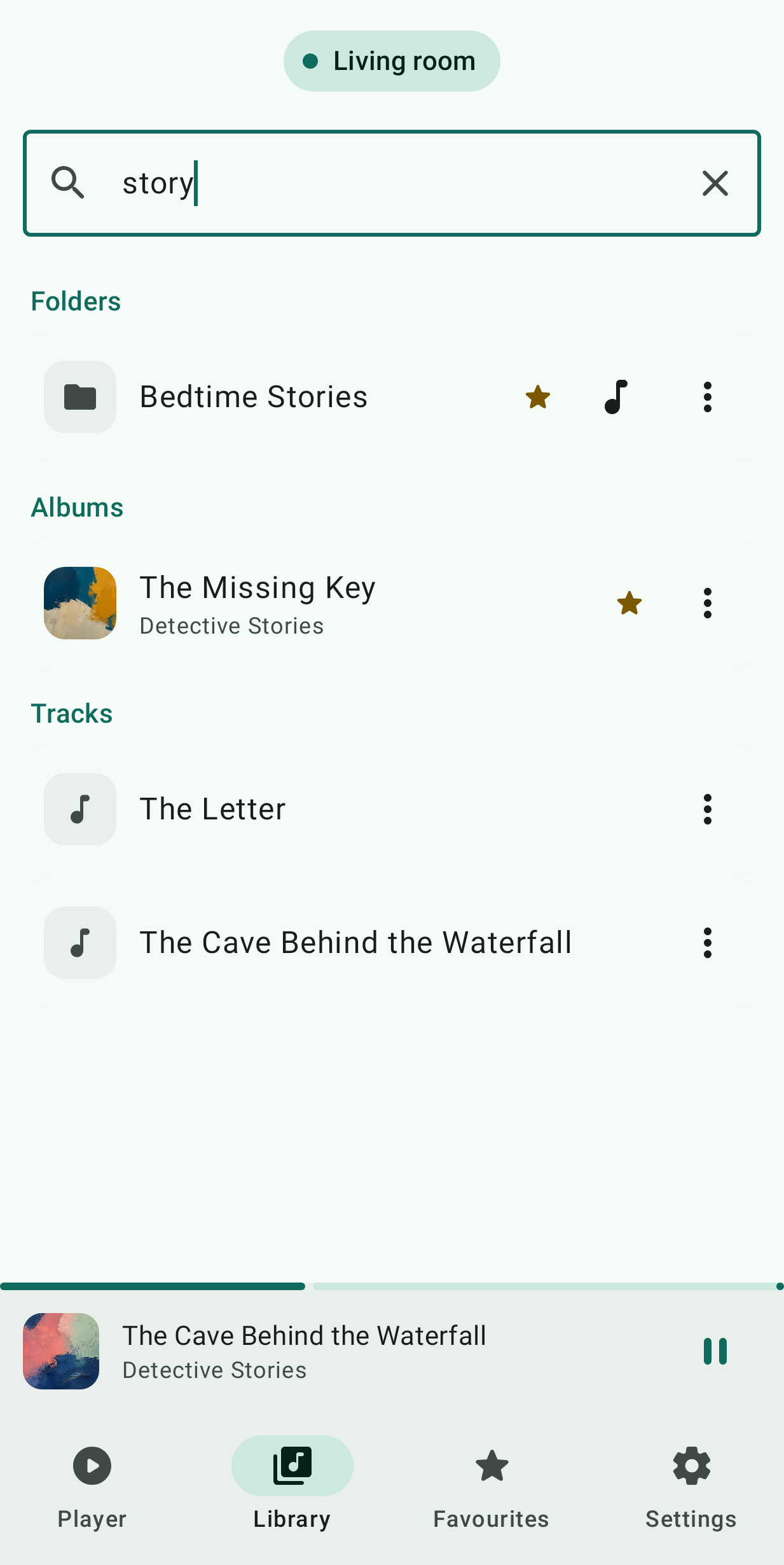
Search
Folder, album and track results, grouped and ready to play.
-
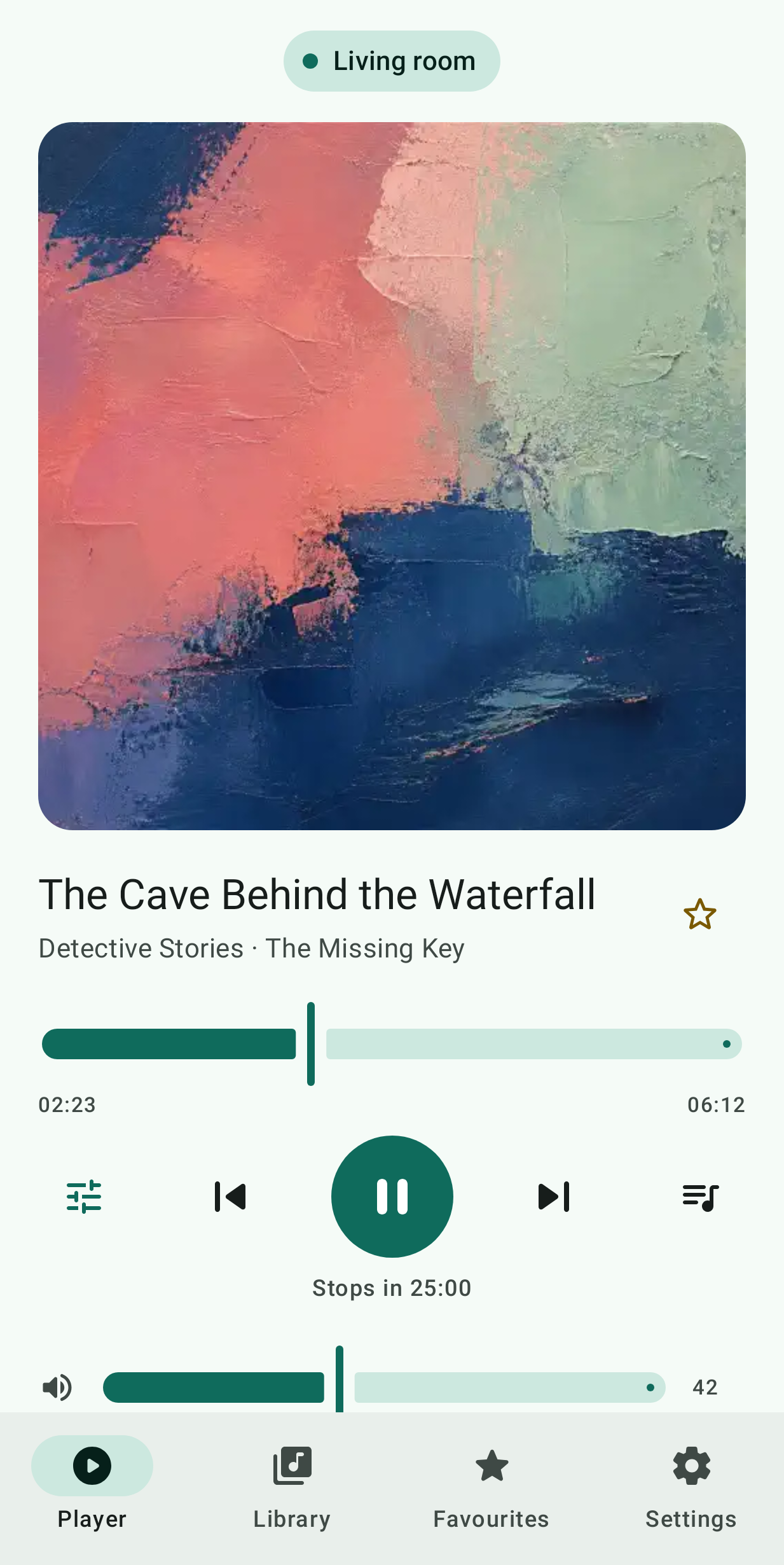
Sleep timer
Counting down to when playback stops. The box stays switched on.
On a tablet
-
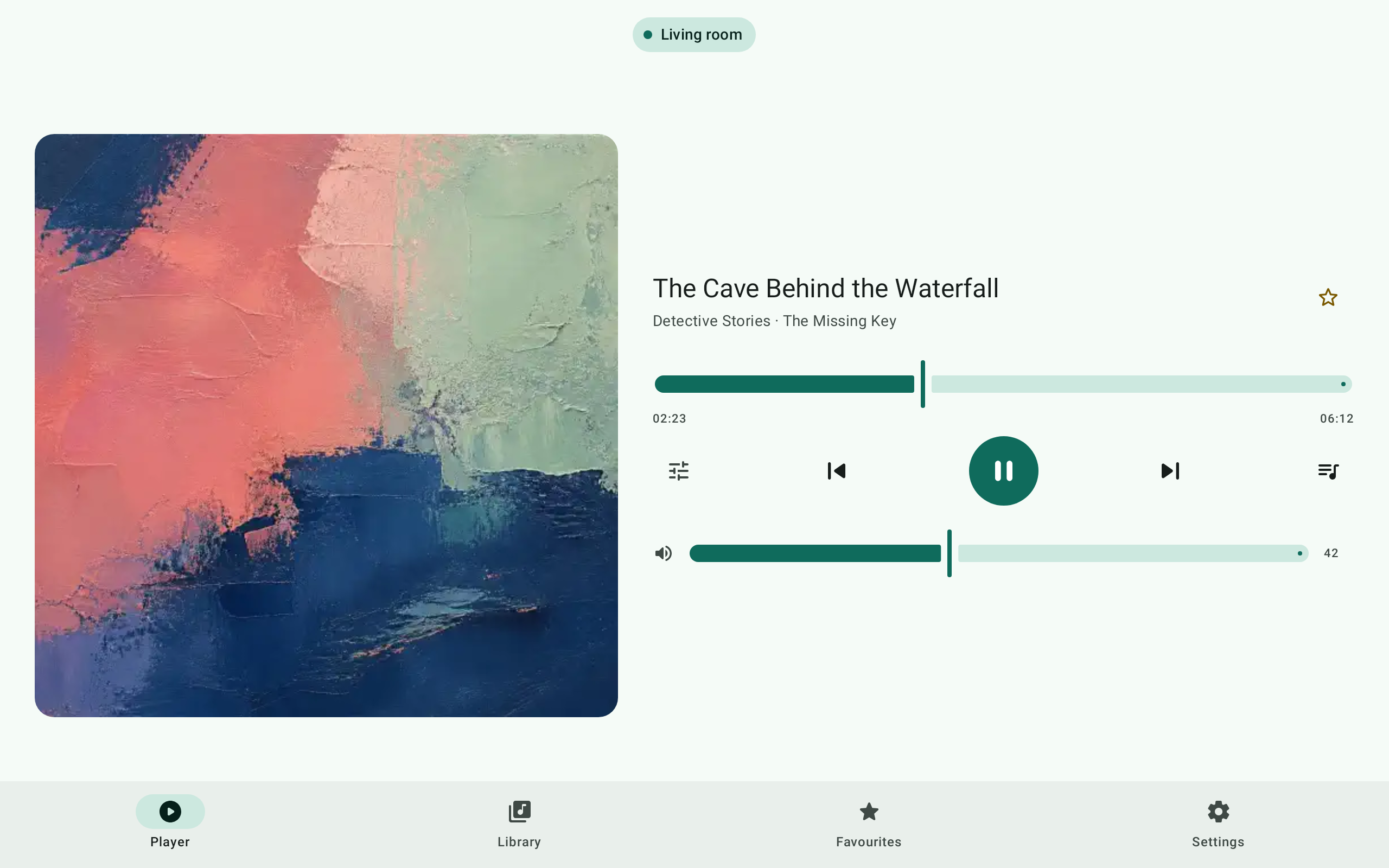
Player
On a wide screen the cover moves beside the controls instead of above them.
-
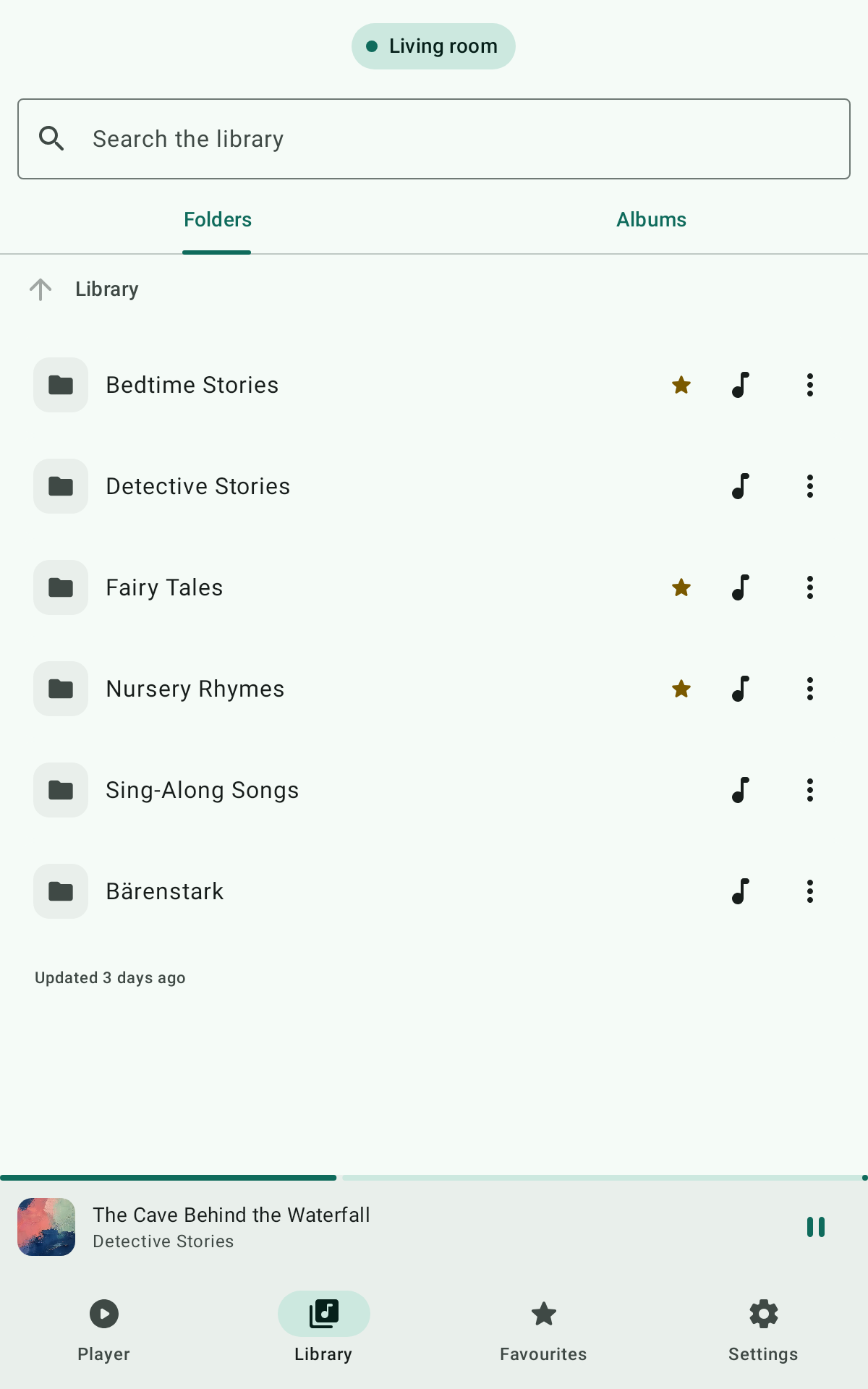
Library
The same folder and album browsing, with room for more of it at once.
-
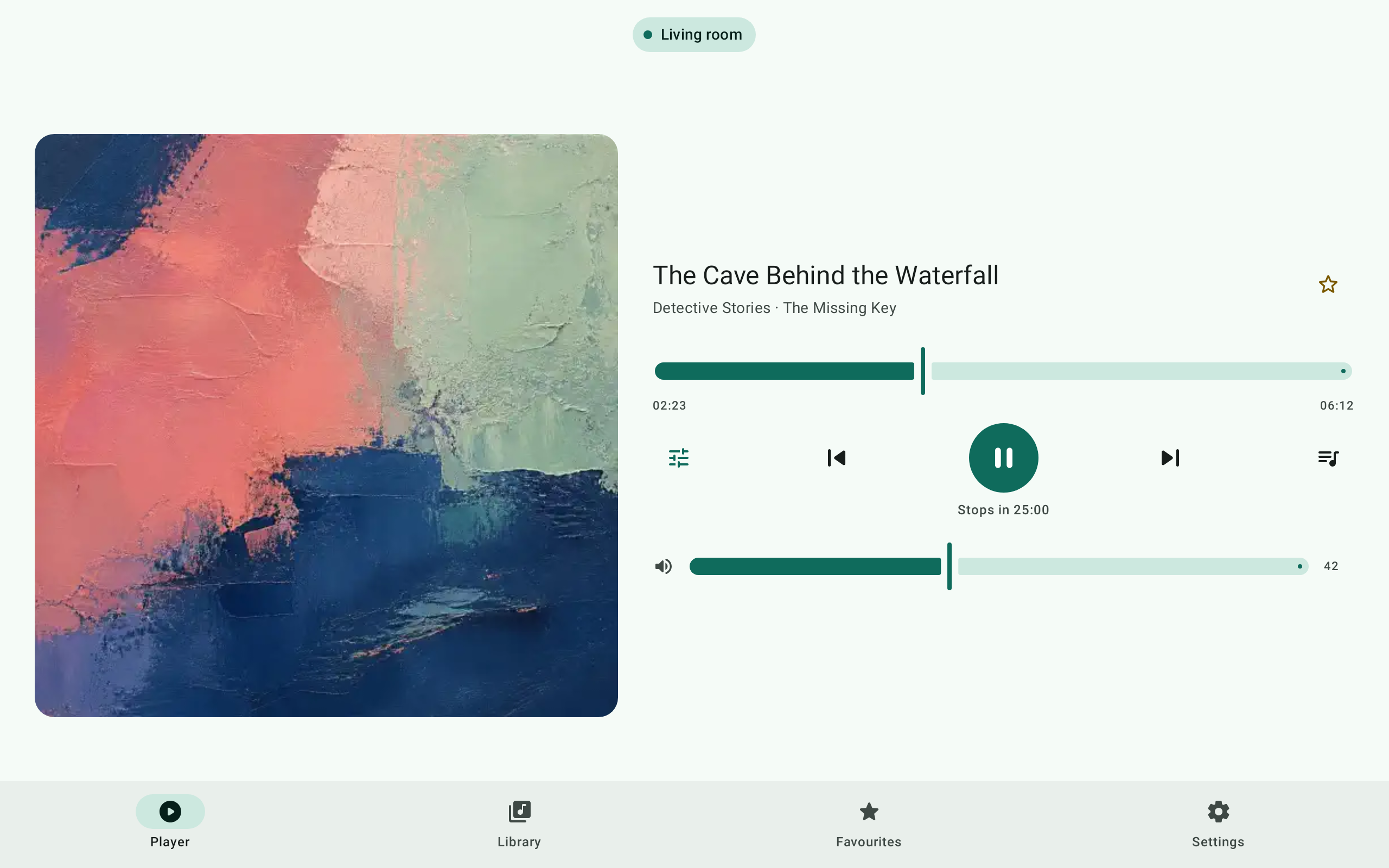
Sleep timer
The countdown sits under the transport controls, where it does on a phone.
What Coil does not do
Card management, system settings and shutdown stay in the Phoniebox web UI. Coil covers the thing you do twenty times a day — putting something on — and deliberately leaves administration alone. Beyond keeping the app focused, it means Coil never sends a command that could take the box down.
That applies to timers too. The box can shut itself down on a timer, or after being idle for a while; Coil offers neither. Its sleep timer is the one that stops the player and leaves the box on.
Requirements
- A Phoniebox running v3 (
future3/main). Earlier versions are not supported - The box and the phone on the same local network
- Android 8.0 or newer
Coil talks to the box over its ZeroMQ interface. That interface is unauthenticated and unencrypted, so Coil is built for local network use only. Don’t forward those ports — use a VPN if you need access from outside the house.
Open source
Coil is free software under the GPL-3.0, and the source is on GitHub. Issues, pull requests and translations are welcome — for anything substantial, please open an issue first, since direction is still worth discussing.
Testing against your own box is the most useful thing you can offer. Different Phoniebox versions, library sizes and hardware turn up problems that no amount of reading the source will.
Relationship to Phoniebox
Coil is an independent third-party client. It is not affiliated with or endorsed by the Phoniebox project. Phoniebox is the work of MiczFlor and contributors; questions about the box itself belong there.